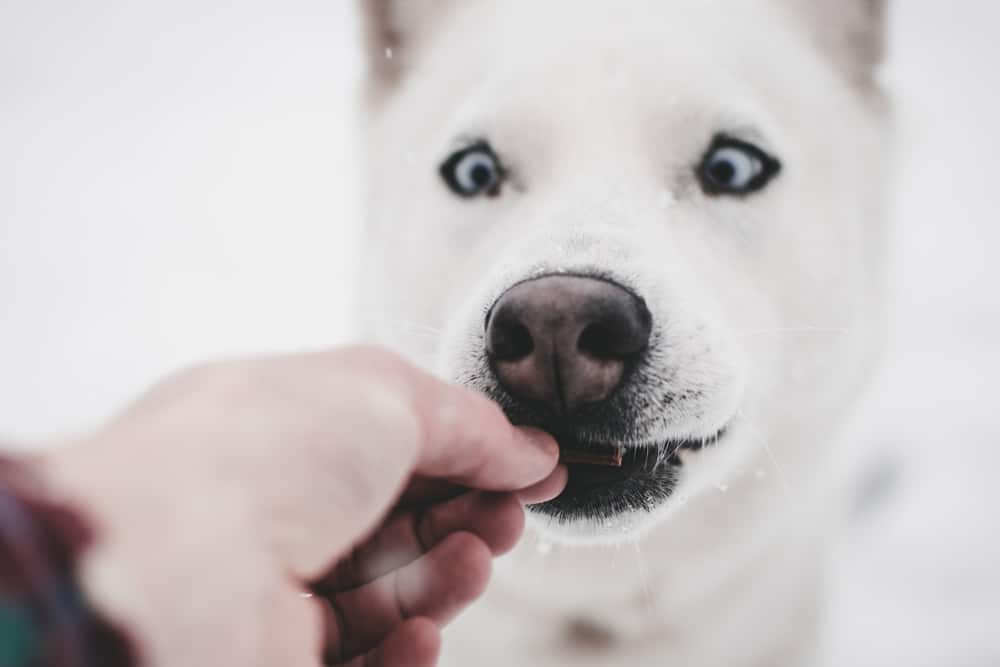
Luring relies on using food like a magnet on puppy’s nose. You can guide puppy, without pushing or pulling, into lots of different positions. First, we’ll get puppy used to the idea of following treats in our hand. He is allowed to lick and nibble at the treats as he moves.
In the video above, the trainer is simply teaching the puppy to follow treats and nibble, and then the trainer is beginning to work on luring a spin. Spin is a very easy trick to teach.
- Lure a spin. Repeat until you like the way the spin looks, the circle is tight, the puppy is confident and happy to turn
- Start luring the spin with low value treats in your luring hand (puppy follows kibble) and have high value treats in your other hand (puppy is rewarded with steak). When puppy has completed the spin that he did following the kibble, click and reward with the steak from your other hand. Repeat until puppy is just following the kibble, not really nibbling it, and still doing a nice circle
- See if puppy will follow your empty hand around in a circle. It can help to have just had treats held in that hand at first, so it still smells a bit yummy. Reward puppy for following your empty hand with tasty treats from your other hand
- Start to fade the signal of the hand that your dog is following. Try just doing the start of the circle and seeing if he will finish it (reward!) or holding your hand higher and just doing a little flourish-circle and seeing if he will still do the entire spin (reward!). If puppy is confused, you might have moved too quickly. Just go back a bit and make it easier. Now you have puppy spinning on a subtle hand-point signal!
- (optional) If you want puppy to learn to spin on a verbal cue, say “spin” then do your finger point/spin signal. With a bit of repetition, puppy should learn to anticipate the hand signal and spin on the word alone. Yay!
In this video, the trainer is showing how to lure a down. You will see in the first example, he lures the puppy straight from a stand by drawing puppy’s nose diagonally down between his front legs. In the second example, he lures the puppy into a sit first then draws his feet forward into a down. Either way is fine, experiment with what works best for your puppy.
The trainer also shows the start of luring “roll over” and of luring a “crawl”. These (and spin, above) are fun tricks to teach with luring.